What Happens When We Stop Following Every Thought?
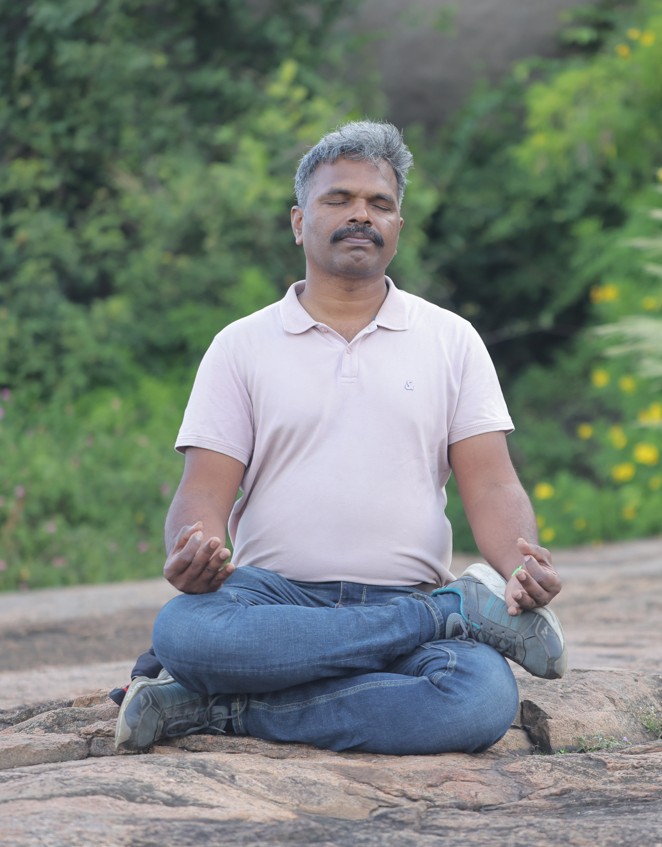
Today, I woke up around 5:20 AM and sat in stillness for more than an hour.
The body remained completely still. What fascinated me was not only the stillness of the body, but the movement of the mind.
As I sat observing, thoughts began to arise continuously. Some appeared as images. Some appeared as voices. Some arrived as fragments of conversations, movie scenes, songs, memories, future plans, or unresolved situations.
One thing became very clear.
Every thought seemed to begin as a small seed.
Sometimes it was a visual image. Sometimes it was a voice. Sometimes it was just a feeling connected to a memory.
The moment the mind recognized that seed, it began constructing a story around it.
A past incident would appear. The mind would immediately start replaying it, analyzing it, correcting it, or imagining how it should have happened differently.
A future possibility would appear. The mind would begin debating outcomes, predicting scenarios, and planning solutions.
I noticed that not all thoughts behaved the same way.
Thoughts connected to stronger emotions, deeper interests, personal desires, fears, opinions, ambitions, habits, or unfinished situations seemed to have more energy. They expanded quickly. One thought generated another thought. One image created another image. One voice created another voice.
Before long, an entire mental movie would be running.
Other thoughts had very little intensity behind them. These would arise briefly and disappear almost immediately.
Observation
The lifespan of a thought did not seem to depend only on the thought itself.
It seemed to depend on the emotional charge, personal attachment, or psychological importance connected to it.
The stronger the attachment, the longer the story.
The weaker the attachment, the shorter the story.
As the observation continued, another interesting pattern emerged.
Whenever awareness became clear, the thought process lost momentum.
The stories would begin fading. The images would weaken. The voices would disappear. The mental movie would slowly dissolve.
Then there would be a brief gap.
A blank moment.
During these gaps, bodily sensations became very vivid. The entire body felt alive with energy. Sensations could be experienced throughout the body. It felt as though every cell was awake and communicating its presence.
Then another thought would arise.
The cycle would begin again.
Image.
Voice.
Story.
Expansion.
Observation.
Dissolution.
Silence.
Again and again.
Clear insight from the session
If I added energy to a thought, the story expanded.
If I simply observed it, the story eventually faded.
The purpose of observation was not to suppress thoughts.
It was not to fight them.
It was not to stop them.
It was simply to see them.
As clearly as possible.
Another spontaneous insight arose during the session:
The body could remain completely still while the mind travelled across years of memories, future possibilities, imagined conversations, desires, fears, ambitions, and unfinished stories.
Yet both could be observed.
The body was being observed. The thoughts were being observed. The stories were being observed.
Then another observation emerged.
During the entire period of observation, there was no active sense of “Manickam” present.
The thoughts contained identities, memories, relationships, plans, opinions, responsibilities, and personal history. But while observing the flow of thoughts, there was no active feeling of being a particular person.
There were thoughts.
There were images.
There were voices.
There were sensations.
There were stories about the past.
There were stories about the future.
But the observer itself did not appear to carry a name, profession, title, achievement, success, failure, or personal history.
The stories contained a person.
The observation did not.
This was not a conclusion. It was not a belief. It was simply an observation from the session.
Another subtle realization followed.
The world being experienced during that hour appeared to be continuously created through thoughts, images, memories, interpretations, emotions, sensations, and stories arising in awareness.
When thoughts became active, a world appeared with its people, situations, conflicts, ambitions, victories, failures, and identities.
When the thoughts faded, those worlds faded with them.
What remained was direct experience.
Sensation.
Stillness.
Observation.
I did not seek to answer what all of this means. I simply continued observing.
Perhaps not every period of stillness needs a conclusion.
Sometimes the value lies in seeing clearly.
Today, I witnessed how thoughts arise, how they gain strength, how they build stories, and how they eventually dissolve when they are no longer fed.
I witnessed how attention can fuel a thought into a world, and how observation can allow that world to fade.
And in the spaces between those stories, there was stillness.
Not a forced stillness. Not an imagined stillness.
Just a simple, quiet absence of mental movement.
For now, that observation is enough.